Rebuilding
It’s hard to explain what it’s like to operate at half-capacity when the world still expects your full self to show up. For the past few years, that’s been my reality on Tamoxifen. Beyond the brain fog, joint pain, stiffness, and general bleh-ness, the hardest part has been the quiet erosion of how young, capable, and like myself I feel.
Tamoxifen blocks estrogen, which fuels certain hormone-receptor-positive cancers like mine. It lowers the risk of recurrence, but it carries serious risks too: blood clots, stroke, uterine cancer. Every day feels like a balancing act—deciding how much discomfort to endure in exchange for protection.
I watch women my age talk openly about hormone replacement therapy—about relief, balance, feeling like themselves again. For me, that conversation happens from the sidelines. I can’t replace the very thing my body must suppress.
For a long time, the goal was simple: get through treatment, stay on the medication, survive. But as the years have passed, the question of how long to stay on it has grown larger.
My oncologist ordered a Breast Cancer Index test, which analyzes my original tumor sample to estimate my risk of late recurrence—how likely the cancer is to come back 5 to 10 years after diagnosis. We’re using it to help decide whether continuing anti-estrogen therapy beyond five years makes sense, especially given the symptoms I’ve been experiencing.
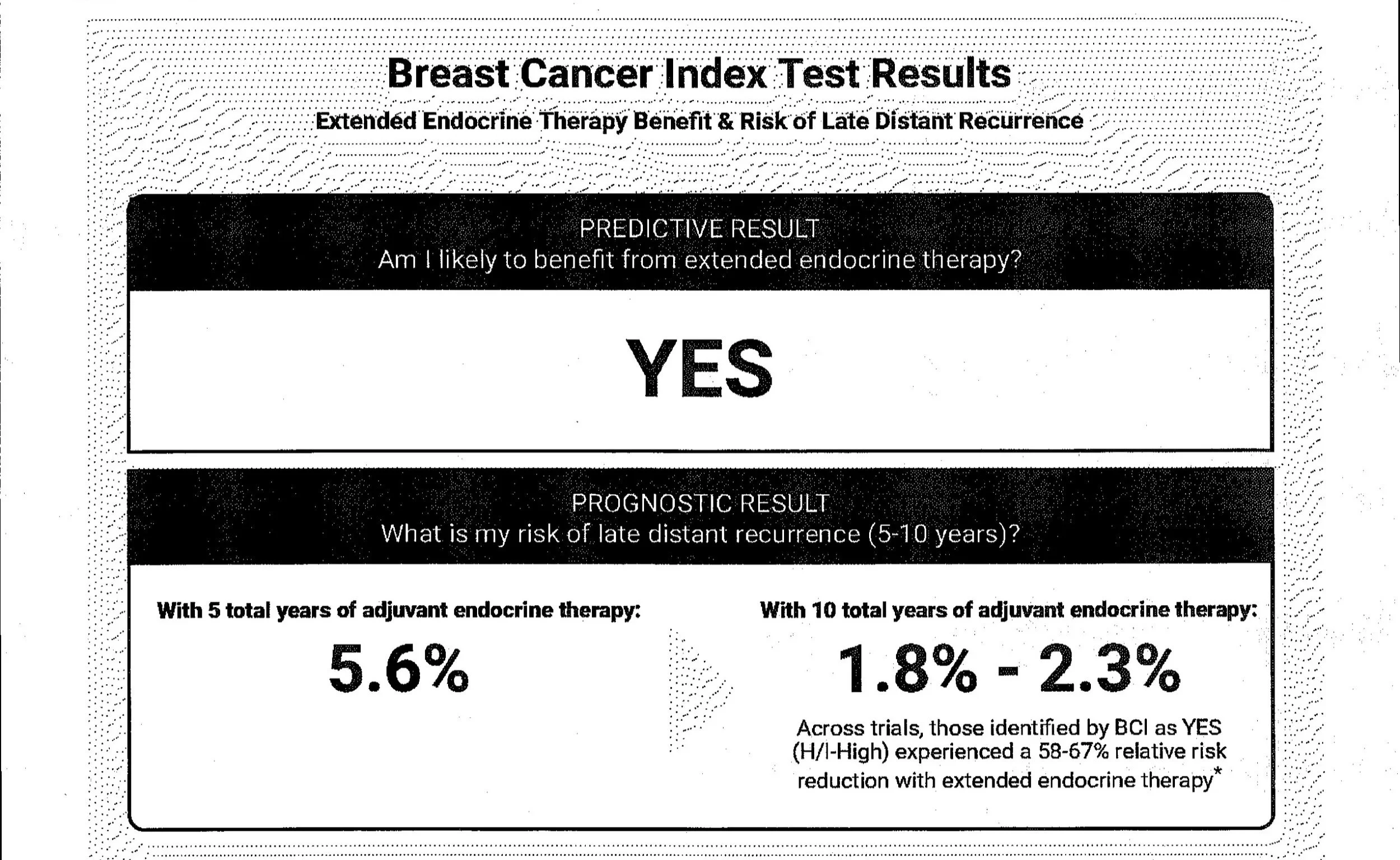
The results came back clear: I’m likely to benefit from extended endocrine therapy—meaning another five years on Tamoxifen. Although the news bums me out, I’m focusing on what I can control—small shifts, daily movement, rebuilding strength.
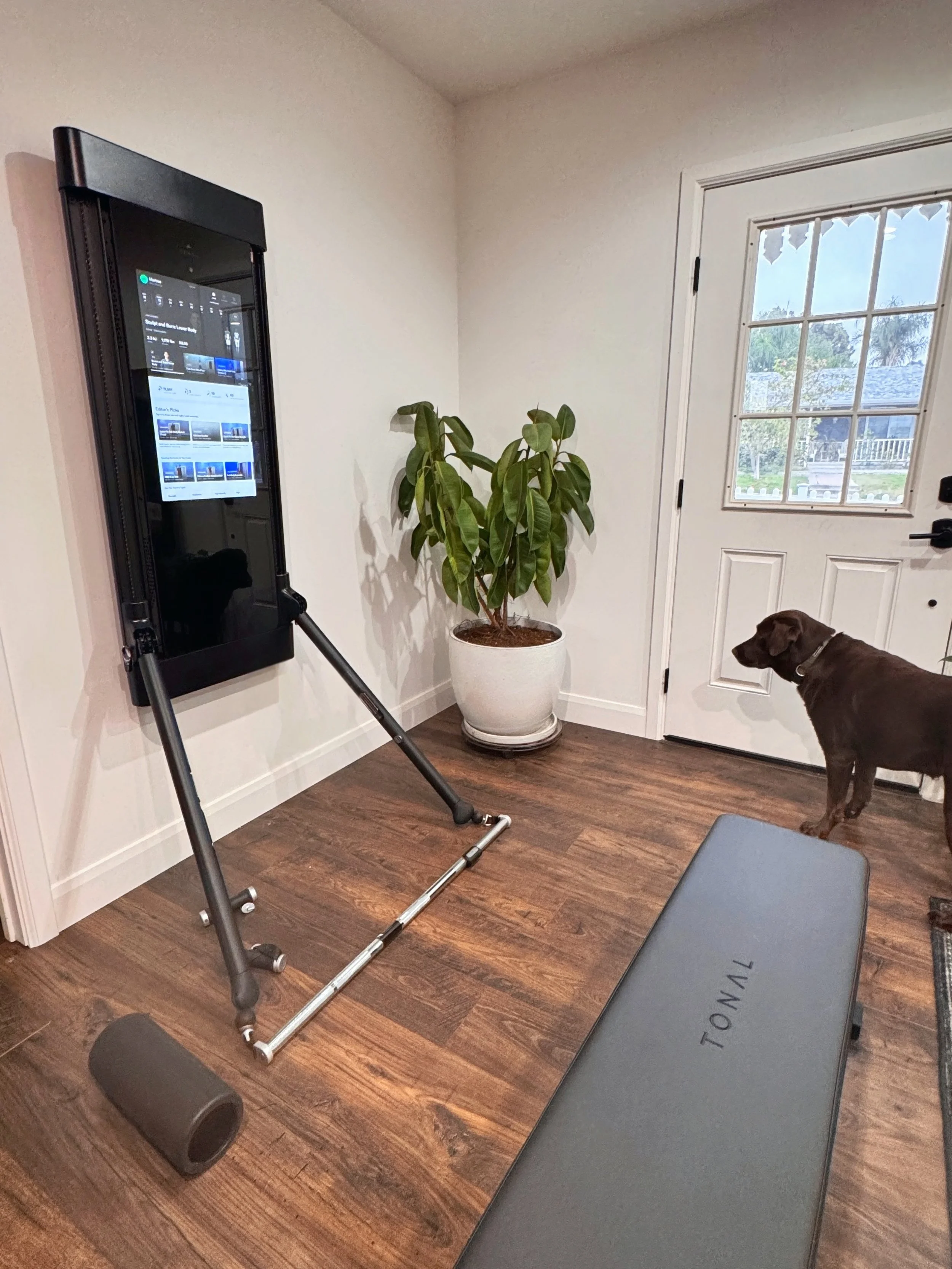
I just installed Tonal in my tiny little home. My living room doubles as my workout studio. If I have to stay on Tamoxifen for another five years, then I’m pushing through the fatigue.
This part of the journey feels especially personal. Over the past seven years, I’ve watched my mom slowly lose her mobility due to her battle with PSP. Seeing how quickly a body can change has shifted something in me. Even on the days I don’t feel great, I want to keep showing up. It’s a reminder not to take movement for granted—and a quiet motivation to keep building strength while I still can.